I used to stare into my closet, a sea of clothes, and still feel like I had nothing to wear. Especially with that one beloved chunky knit sweater. It was cozy, beautiful, but it felt like a one-trick pony, destined only for Saturday mornings with sweatpants. This feeling, the "closet full, nothing to wear" syndrome, is a common trap. We buy more, thinking it’ll solve the problem, but it often just adds to the overwhelm. What I learned, through years of trial and error, is that the solution isn’t more clothes; it’s more ways to wear the clothes you already own. And the absolute best place to start? Your favorite sweater.
The most important conclusion I’ve come to is this: stop buying five cheap, trendy sweaters every season. Instead, invest in one, maybe two, truly high-quality, versatile sweaters. A well-chosen sweater, cared for properly, can anchor countless outfits. It’s about unlocking its full potential, transforming it from a simple garment into a foundational piece of your wardrobe.
Forget Fast Fashion, Invest in a Quality Crew Neck
Listen, I’m going to be direct: don’t buy those $30 acrylic sweaters from Zara or H&M. They pill, they stretch, they look tired after three washes. Get a good one instead. My unequivocal recommendation for versatility and longevity is a classic crew neck sweater made from a quality natural fiber blend. Specifically, look for merino wool or a merino-cashmere blend. Cashmere is luxurious, yes, but pure cashmere can be delicate and pricey. A good merino blend offers incredible softness, breathability, and durability for less.
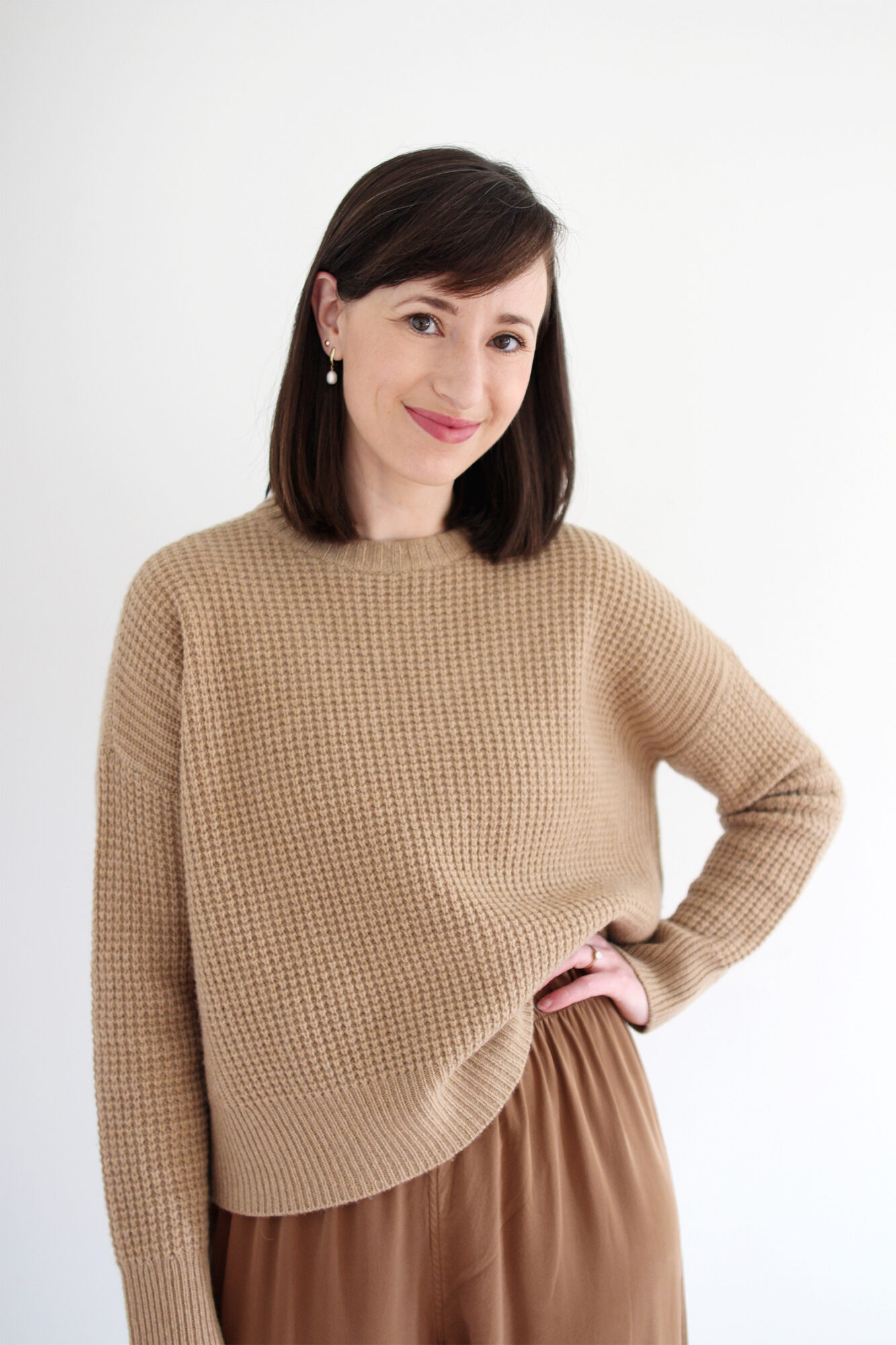
For me, the sweet spot is something like Everlane’s The Cashmere Crew. It’s 100% Grade-A cashmere, but they frequently have sales, dropping the price from its usual $168 down to around $100-$120. That’s a steal for cashmere of this quality. If cashmere feels like too much, Madewell’s merino wool sweaters (often around $98-$120) are fantastic alternatives. They hold their shape, resist pilling better than anything synthetic, and regulate temperature beautifully. I’ve owned my Everlane crew for three years, and it still looks almost new, all thanks to proper care.
Why Merino Blends Often Trump Pure Cashmere for Value
While pure cashmere feels incredible, a good merino wool blend offers superior resilience for everyday wear. Merino fibers are finer and softer than traditional wool, making them less itchy, but they also have a natural elasticity that helps garments resist wrinkles and maintain their shape. For a piece you want to wear constantly and put through its paces – dressing it up, dressing it down – the added durability of merino can be a . Pure cashmere can be prone to snags and requires more meticulous handling. For a daily workhorse sweater, I pick the blend every time.
My Go-To: Everlane The Cashmere Crew ($168)
I mention this specific sweater for a reason. Its classic crew neck, relaxed but not baggy fit, and standard length (hitting just below the hip) make it the perfect canvas for endless styling. I chose it in a neutral color, "Bone" (an off-white), because it pairs with everything. A classic grey or navy would be equally effective. The key is the simplicity of the design – no fussy details, just clean lines. At $168 full price, it’s an investment, but I guarantee you’ll get more wear out of it than five cheaper sweaters combined.
Your Sweater Dilemmas, Solved
Over the years, I’ve heard every sweater-related question in the book. Let’s tackle a few common ones:
How do I prevent pilling on my sweaters?
Pilling is inevitable with friction, especially in areas like underarms or where a bag rubs. The best prevention is choosing quality natural fibers (like the merino I mentioned). Once pills appear, do NOT pick them off with your fingers; it can pull threads. Instead, invest in a good fabric shaver. My go-to is the Conair Fabric Defuzzer (about $15). It’s battery-operated, gentle, and remarkably effective at making sweaters look new again. Use it regularly, not just when the pilling gets bad.
Can I wear a chunky sweater under a coat without looking bulky?
Yes, but it requires strategic layering. The key is the coat’s cut. Avoid slim-fit coats. Opt for an oversized blazer, a swing coat, or a slightly boxier wool coat. The sleeves are the biggest challenge; make sure the coat sleeves are wide enough to accommodate the sweater without bunching. A classic wool topcoat, like the ones from Aritzia, often has enough room. Also, if your sweater is truly chunky, consider an outer layer that’s more of a jacket-coat hybrid, like a relaxed chore coat.
What about layering a sweater over dresses?
This is one of my favorite tricks for extending the life of summer and fall dresses. For a fitted slip dress or a sleek midi, a slightly oversized crew neck sweater works beautifully. You can wear the sweater over the dress, treating the dress as a skirt. Add a belt at your natural waist over the sweater to define your silhouette. For a more casual vibe, try a chunky knit over a denim or cotton smock dress. The contrast in textures adds interest. Always make sure the dress fabric isn’t too thick, or it will feel bulky underneath.
The Power of the Belt: Instantly Transform Your Silhouette
This is a short, sharp tip: if your sweater feels too shapeless or boxy, grab a belt. Any belt. Cinch it at your natural waist, either over the sweater itself or over the sweater and a skirt/dress. It instantly creates an hourglass figure, adds polish, and makes the outfit look more intentional. A simple leather belt can elevate a casual sweater and jeans combo to something chic and put-together.
Understanding Sweater Knits and Lifespan
The longevity and styling versatility of a sweater aren’t just about the fiber; the knit structure plays a massive role too. This is pure education, no specific product mentions, just foundational knowledge.
Sweaters are knitted, not woven, which means they’re created from a single continuous yarn. The way this yarn is looped together determines the "knit." You’ve got everything from fine gauge jersey knits to thick cable knits. Understanding these helps you predict how a sweater will drape, feel, and hold up over time.
A fine gauge knit, often seen in merino or cashmere, uses thin yarns and small needles, resulting in a smooth, dense fabric. These sweaters are excellent for layering because they aren’t bulky. They’re the chameleons of the sweater world, easily dressed up or down. Because of their tighter structure, they also tend to be more resistant to snags than looser knits, though pilling can still occur with friction.
Medium gauge knits include popular styles like shaker stitch or rib knits. These offer more texture and visual weight than fine gauge but are still relatively easy to layer. A good ribbed knit, for instance, offers natural stretch and body-hugging comfort without feeling restrictive. These are often made from cotton blends or thicker merino, providing a good balance of warmth and breathability.
Chunky or heavy gauge knits, such as cable knits or chunky brioche, use thick yarns and large needles. These are your ultimate cozy, statement sweaters. They are meant to be the star of the outfit and are less ideal for heavy layering under fitted jackets. Their loose structure can sometimes make them more prone to snagging or stretching out if not properly cared for. The trade-off is unparalleled warmth and a distinct textural appeal.
The lifespan of a sweater is intrinsically linked to its knit and fiber. A tightly knitted, high-quality merino or cashmere sweater, properly cared for (more on that below), can last for a decade or more. Synthetic alternatives, while initially cheaper, often have a shorter life cycle. They tend to pill rapidly, lose shape, and can trap odors, leading to more frequent washing and faster degradation. Investing in better quality means less waste and a more reliable wardrobe. It’s a simple equation: better materials and construction mean longer wear, which means more styling opportunities.
The Difference Between Gauge and Ply
Gauge refers to the number of stitches per inch, indicating the fineness or coarseness of the knit. A high gauge (e.g., 12-gauge) means a fine, tight knit, while a low gauge (e.g., 3-gauge) indicates a chunky, loose knit. This directly impacts drape and warmth.
Ply refers to the number of individual strands of yarn twisted together to make a single thread. Two-ply (2-ply) yarn is common and durable. Higher ply numbers (e.g., 4-ply, 8-ply) mean a thicker, denser, and often warmer yarn. More plies generally equate to a more robust and luxurious feel, but also higher cost. Don’t confuse high ply with high quality if the base fiber itself is poor.
Extending Longevity: Proper Washing & Storage
This is crucial. Most quality sweaters are hand-wash or dry-clean only. I hand-wash almost all my wool and cashmere. Use a gentle wool-specific detergent like Eucalan or The Laundress Wool & Cashmere Shampoo (both around $20). Fill a basin with cool water, add detergent, submerge the sweater, and let it soak for 30 minutes. Gently squeeze out excess water – do NOT wring. Lay it flat on a clean towel, roll the towel to absorb more water, then unroll and reshape it on a flat surface (like a drying rack) away from direct heat or sunlight. NEVER hang a wet sweater; it will stretch and lose its shape. Store sweaters folded, not hung, to prevent shoulder bumps and stretching. Cedar blocks (about $10 for a pack) in your drawers keep moths away.
Styling Way 1: The Casual Everyday "It" Girl Look
This is my default. Take your neutral crew neck sweater and pair it with high-waisted, straight-leg jeans. My current favorite jeans are the Madewell Perfect Vintage Jean ($128) in a light to medium wash. The fit is incredibly flattering. For the sweater, a simple front-tuck – just tucking the very front hem into your waistband – gives a relaxed, effortless vibe without looking sloppy. Finish with clean white sneakers. The Veja V-10 Sneakers ($165) are a personal favorite for their comfort and classic look. This outfit is perfect for errands, casual brunch, or a relaxed weekend.
The Perfect Tuck: Front vs. Full
A full tuck can look too formal or even bulky with a sweater. The front-tuck, often called a "French tuck," is the sweet spot. It defines your waistline subtly and allows the rest of the sweater to drape naturally. It’s incredibly simple but makes a huge difference in creating a more polished silhouette. Experiment with how much you tuck – sometimes just a sliver, sometimes a bit more, depending on the sweater’s thickness and your pants’ rise.
Footwear Matters: Veja V-10 Sneakers ($165)
Good quality, minimalist sneakers are non-negotiable for this look. The Veja V-10s are comfortable and stylish. The subtle branding adds a touch of interest without being overwhelming. They’re a little pricey, but they hold up well and clean easily, making them a worthwhile investment over cheaper, less durable options.
Styling Way 2 & 3: Elevated Workwear & Chic Evening
Here’s how you can take that same sweater from a professional setting to an evening out with just a few swaps. The core sweater stays, but the supporting cast changes dramatically.
| Occasion | Bottoms | Outerwear | Shoes | Accessories |
|---|---|---|---|---|
| Elevated Workwear | High-waisted tailored trousers (e.g., Aritzia Effortless Pant, $148) or a sleek midi pencil skirt. | Structured blazer (e.g., H&M Oversized Blazer, $50) in a complementary neutral like black or camel. | Pointed-toe flats or loafers (e.g., Sam Edelman Loraine Loafers, $150). | Delicate gold jewelry, a structured leather tote bag. |
| Chic Evening | Black leather pants (e.g., Zara Faux Leather Leggings, $49.90) or a satin bias-cut midi skirt. | Long wool coat or a draped trench coat. | Heeled ankle boots (e.g., Steve Madden Vionnet Boots, $130) or classic pumps. | Statement earrings, a clutch bag, bold red lipstick. |
The Aritzia Effortless Pant: My Workwear MVP
These trousers are a . The wide-leg, high-waisted fit is incredibly flattering, and the fabric drapes beautifully. They look far more expensive than their $148 price tag. Paired with a sweater and a blazer, you look polished and professional without sacrificing comfort. They’re the perfect example of investing in a versatile foundational piece.
Zara Faux Leather Leggings: The Evening Essential
I know I said no fast fashion, but for a specific trendy item like faux leather leggings, Zara often hits the mark without breaking the bank. At $49.90, they offer that edgy, sophisticated vibe for an evening out without requiring a huge commitment. They add instant texture and a modern feel, balancing the softness of the sweater perfectly.
Styling Way 4 & 5: The Unexpected Skirt & Layered Over Dresses
These are the outfits that truly unlock the sweater’s potential, pushing it beyond just jeans or trousers. Embrace texture and silhouette contrasts for maximum impact.
- The "Cozy Meets Chic" Midi Skirt: This is a favorite for fall and winter. Take your sweater and pair it with a flowing midi skirt. Think silk, satin, or even a pleated faux leather midi. My go-to is an Aritzia Slip Midi Skirt ($98) in black or a deep jewel tone. Tuck the sweater fully or do a half-tuck. Add knee-high boots (like the Dolce Vita Shanta Boots, $200) for warmth and elegance. This combination feels elevated, comfortable, and unexpected.
- The "Dress-as-Skirt" Layer: Revisit your favorite summer or spring dress. A simple slip dress or a column dress works best. Put your sweater on top of the dress, letting the dress act as a skirt. The sweater should hit around your hip or slightly below. This is fantastic for transitional weather. For example, a black Target A New Day Slip Dress ($25) can be instantly winterized. Add opaque tights and ankle boots, and suddenly your summer staple is a winter workhorse.
Aritzia Slip Midi Skirt: Versatility Champion
I constantly recommend the Aritzia Slip Midi Skirt because of its incredible versatility. The bias cut drapes beautifully, making it flattering on almost everyone. It can be dressed up or down, and its thin fabric means it layers seamlessly under sweaters without adding bulk. It’s one of those pieces that makes your entire wardrobe work harder.
Ultimately, a quality sweater isn’t just a piece of clothing; it’s an investment in your personal style and a testament to smarter dressing. Stop chasing trends and start building a wardrobe of versatile, well-made pieces that you can endlessly reinvent. It’s the secret to always having something amazing to wear, no matter the occasion.